Once when Frederic Kieffer was savoring Oysters Rockefeller at a Charleston, South Carolina, restaurant, he came upon a pearl – not the kind that adorns Mikimoto strands, mind you, but an irregular thing of beauty. And doing what any sensible husband would do, he immediately gave it to his wife, who kept it for a long time.
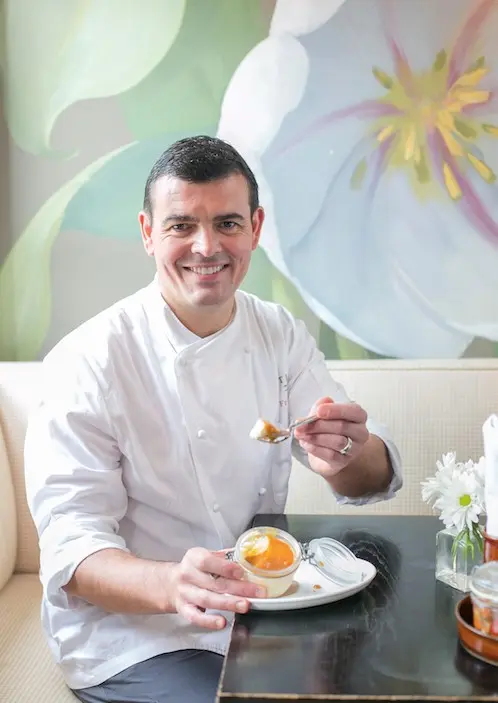
But then, Kieffer has no need of pearls himself. As corporate chef and partner in Connecticut’s Delamar Hotel Collection, he has long regarded the versatile mollusk as a gem in itself for the way it sustains both humanity and the planet.
“Oysters are very popular from l’escale to La Plage,” he said, referring respectively to the restaurants at the Delamar Greenwich Harbor and sister property The Inn at Longshore in Westport (believed to be an inspiration for Jay Gatsby’s estate in “The Great Gatsby.”)
The oyster’s sustenance was well-known to the native peoples of Connecticut and New York, who found all the nutrients they needed in the once plentiful oyster beds and the so-called Three Sisters – corn, beans and squash. But with the arrival of the colonists, natural oyster beds were soon depleted and both regulation and importation proved less than fruitful.
In the 19th century, experiments in cultivating oysters in artificial beds would make Connecticut the New York-New England leader in oyster production only to see a variety of factors – everything from climate change to economic depressions to a greater emphasis on coastal living – once again threaten the oyster in this area a century later.
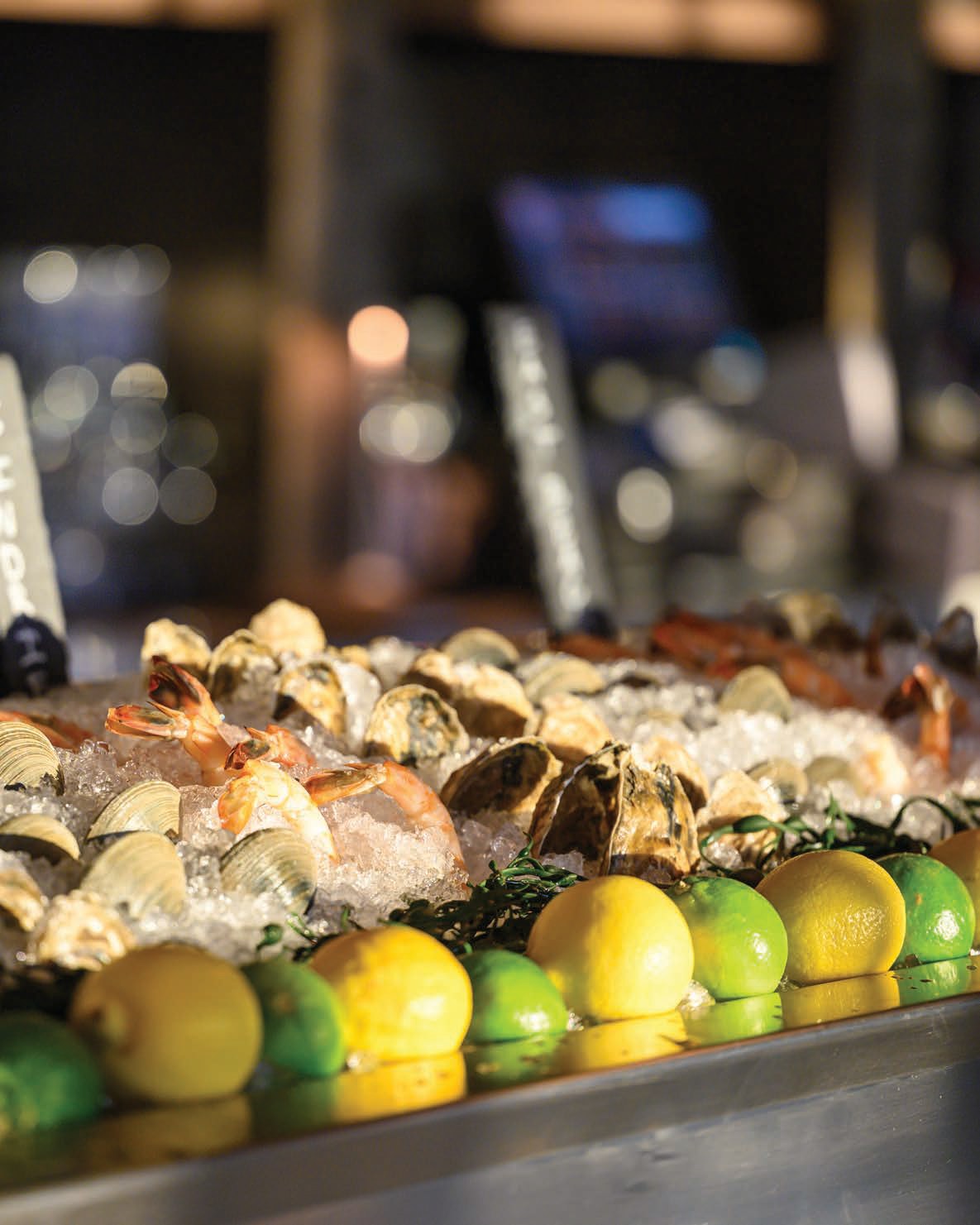
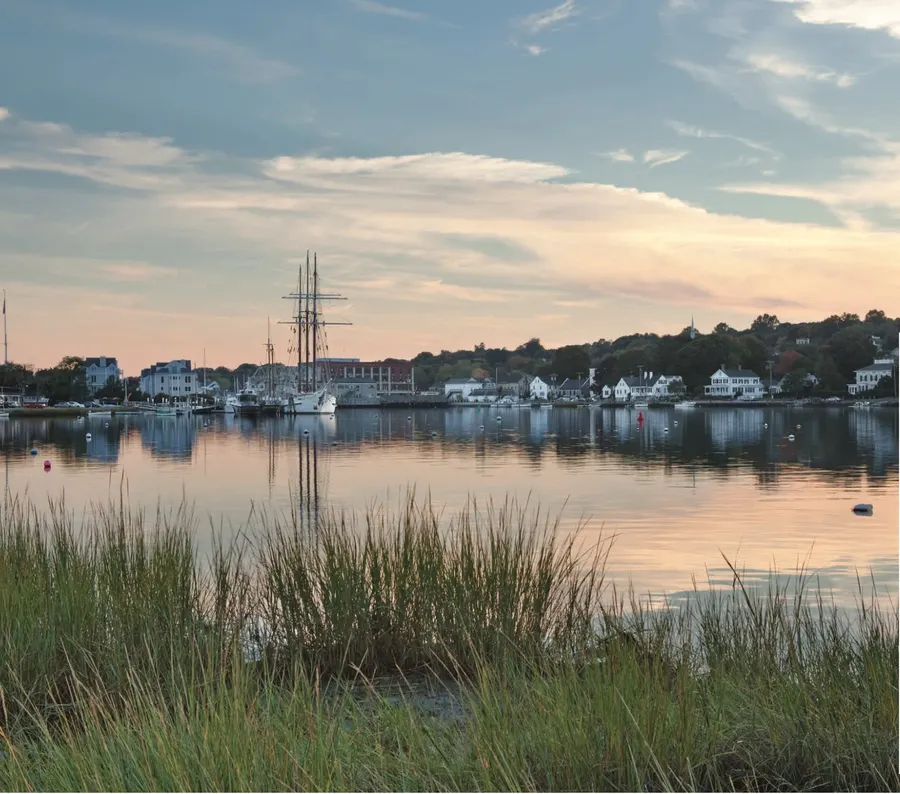
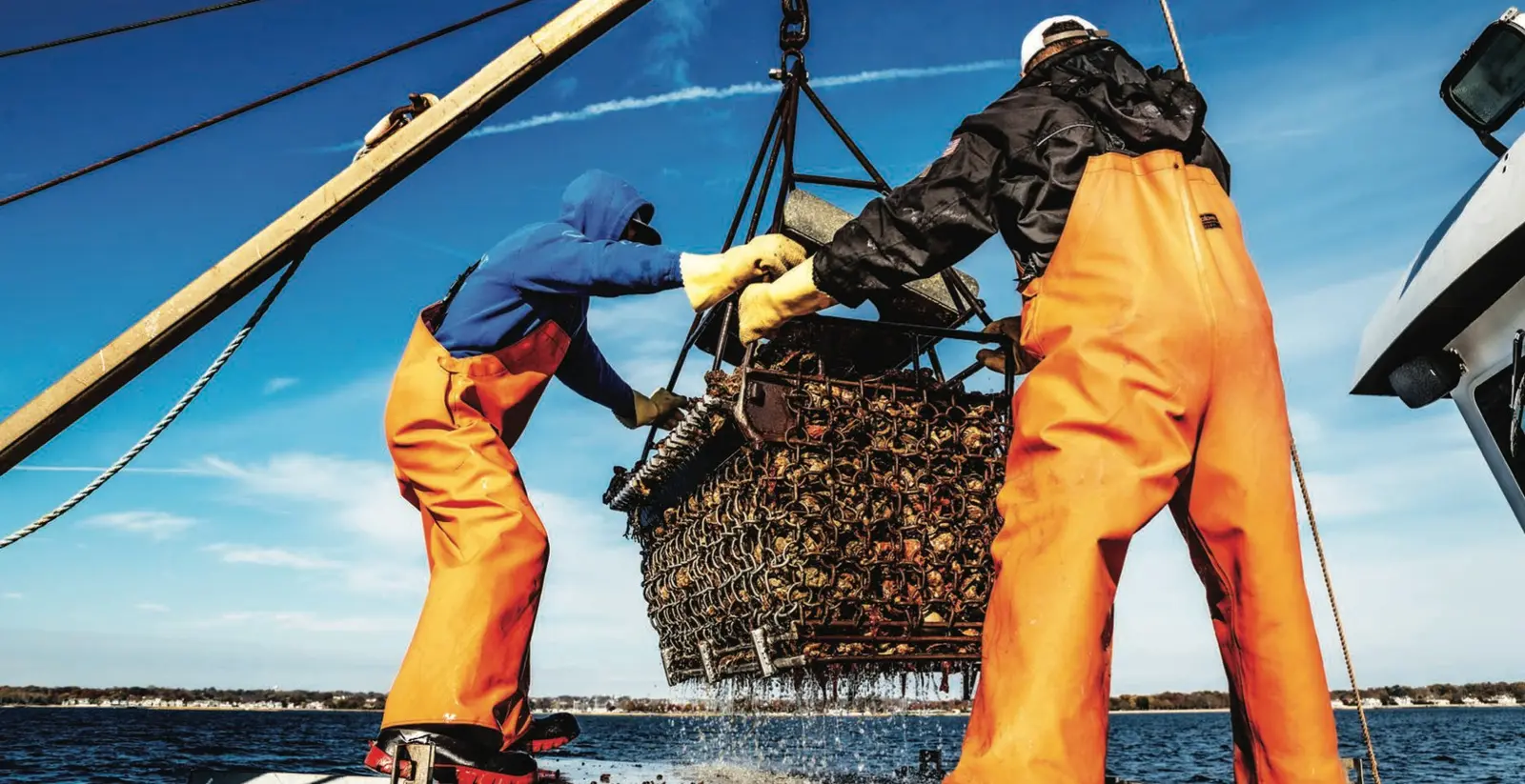
In our time, the Connecticut oyster has bounced back, thanks to the rise of aquaculture – the farming of aquatic plants and animals in underwater beds in such coastal communities as Bridgeport, Mystic, New Haven and Norwalk, which holds its 46th annual Oyster Festival Sept. 6 through 8. Kieffer has two “go-to” sources for the oysters served in the Delamar restaurants – Copps Island Oysters, founded in Norwalk in 1994 by Norm Bloom; and Noank Oysters near Mystic. He’s also fond of Canadian Malpeque oysters. Indeed, cold-water oysters are said to be crisper and sweeter than their fleshier, brinier warm-water cousins.
At such restaurants as L’escale, La Plage and the Artisan at the Delamar Southport – there’s also an Artisan at the Delamar West Hartford – Kieffer likes to serve a chef’s special of raw oysters, four from New England and two from Canada. Oysters might also pop up in crudos, dressings and chowders. (See accompanying recipes.)
Though they are associated with the tastes of summer, the best months to enjoy oysters are those that end in “r” – September through December – Kieffer said. For newbies, start with the Noank or Malpeque oyster, which are less fishy, then skip the cocktail sauce and the mignonette (vinegar, shallots and pepper) and go straight for the cracked black pepper to bring out the flavor.
“ What people here consider a weed is one of the world’s most consumed plants. ”
As for the shells, they along with the mussel and clam shells used in the restaurants are cleaned and collected regularly by Connecticut’s Collective Oyster Recycling & Restoration (CORR) to nourish the ocean floor.
No doubt, oysters will have their moment when the Delamar Collection debuts the Delamar Mystic and its La Plage restaurant and oyster bar and the Delamar Westport, later in the year. The Delamar Westport will feature global mediterranean in a restaurant called Dandelion, after the misunderstood plant.
“What people here consider a weed is one of the world’s most consumed plants,” Kieffer observed.
Wonder how dandelion greens pair with oysters.
For more, visit delamar.com.
La Plage Oyster Chowder
Ingredients
- 4 tablespoons extra virgin olive oil
- 3 celery sticks, preferably the inner ones as they are more tender
- 1 large Vidalia onion
- 1 large fennel
- 2 large leeks
- 3 cloves of garlic
- 3 ounces gluten-free flour
- 1 large can clam juice (51 ounces or the equivalent in a smaller bottle)
- 1 ounce Pernod Ricard
- 1 cup dry vermouth
- 1 cup Chardonnay
- 2 cups heavy cream
- 8 ounces fingerling potatoes
- 4 sprigs thyme
- 50 to 60 Copps Island oysters or medium oysters of your choice
- 6 ounces oyster crackers. (Frederic Kieffer uses homemade fennel crackers, but store-bought oyster crackers are an acceptable substitute.)
- 3 pieces small green onion or 6 pieces scallion
- Salt and pepper to taste
Directions
- Peel and slice the fingerling potatoes into 1/8-inch pieces. Set aside.
- Pick the thyme leaves off the sprigs. Set aside.
- Open the oysters, remove them from the shell and place them in a bowl with their own liquid (oyster juice). Keep them refrigerated.
- Wash and thinly slice the green onion on a bias, making ½-inch long strips.
- Peel and dice the onion into ¼-inch pieces.
- Wash and dice the fennel and celery sticks into ¼-inch pieces.
- Cut the leeks into ¼-inch square pieces, mostly the white part, then wash them.
- Peel and smash the garlic cloves.
- Cook the Vidalia onion, leeks, fennel, garlic and celery with the olive oil over medium heat for 5 minutes, till they are translucent.
- Stir in the gluten-free flour and cook for 1 minute.
- Add the clam juice and bring to simmer.
- Add all the other liquids, heavy cream, fingerlings and thyme leaves.
- Simmer for about 40 minutes, making sure the potatoes are cooked but not falling apart.
- Check the seasoning, salt especially.
To serve the chowder
Place the oysters in a shallow pot and heat them up to a light simmer for about 15 seconds.
Place 5 or 6 cooked oysters in each soup plate, arrange the crackers over the oysters and sprinkle the green onion.
Serve the plate as is, then ladle the chowder table-side. Serves 10 to 12.
La Plage Beef and Oyster Tartare
Ingredients
- 24 ounces fresh Angus beef striploin or filet mignon cleaned (net weight)
- 2 fresh shallots preferably unpeeled
- ¼ bunch of curly parsley (Italian parsley could work as well.)
- 1 tablespoon chopped preserved lemon (skin only) (available in Mediterranean grocery stores)
- 3 tablespoons good extra virgin olive oil
- ½ teaspoon Worcestershire sauce
- 2 dashes tabasco
- Fleur de sel, or Maldon salt
- Freshly ground black pepper
- 16 medium-size oysters such as Copps Island
- 8 quail egg yolks (optional)
- 2 ounces sturgeon caviar (optional)
- Micro green of your choice to decorate the tartare
- Thin slices of baguette toasted to be served on the side
Directions
- Dice the beef into small 1/8-inch cubes. Place the diced beef in a mixing bowl.
- Peel and finely dice the shallots.
- Wash and chop the curly parsley.
- Remove the inside of the preserved lemon and finely dice the skin.
- Open the oysters, remove them from the shell and set aside the 8 best-looking ones.
- Cut up the remaining 8 oysters into ¼-inch chunks.
- Mix into the diced beef the olive oil, diced shallots, chopped parsley and diced preserved lemon.
- Once well-mixed, add the Worcestershire sauce, tabasco, fleur de sel and freshly ground black pepper.
- Taste the tartare for salt and spiciness. It should have a little bit of heat but not too much.
- Finally, fold in the chopped oysters delicately.
- You can free form the tartare on each plate or use a ring mold to shape it.
- Add the remaining oysters on top of each tartare.
- Garnish the tartare with micro green.
- If using the quail egg yolk or caviar option, simply add these elements on top of the tartare alongside the oyster.
- Serve with toasted thin slices of baguette. Serves 8.